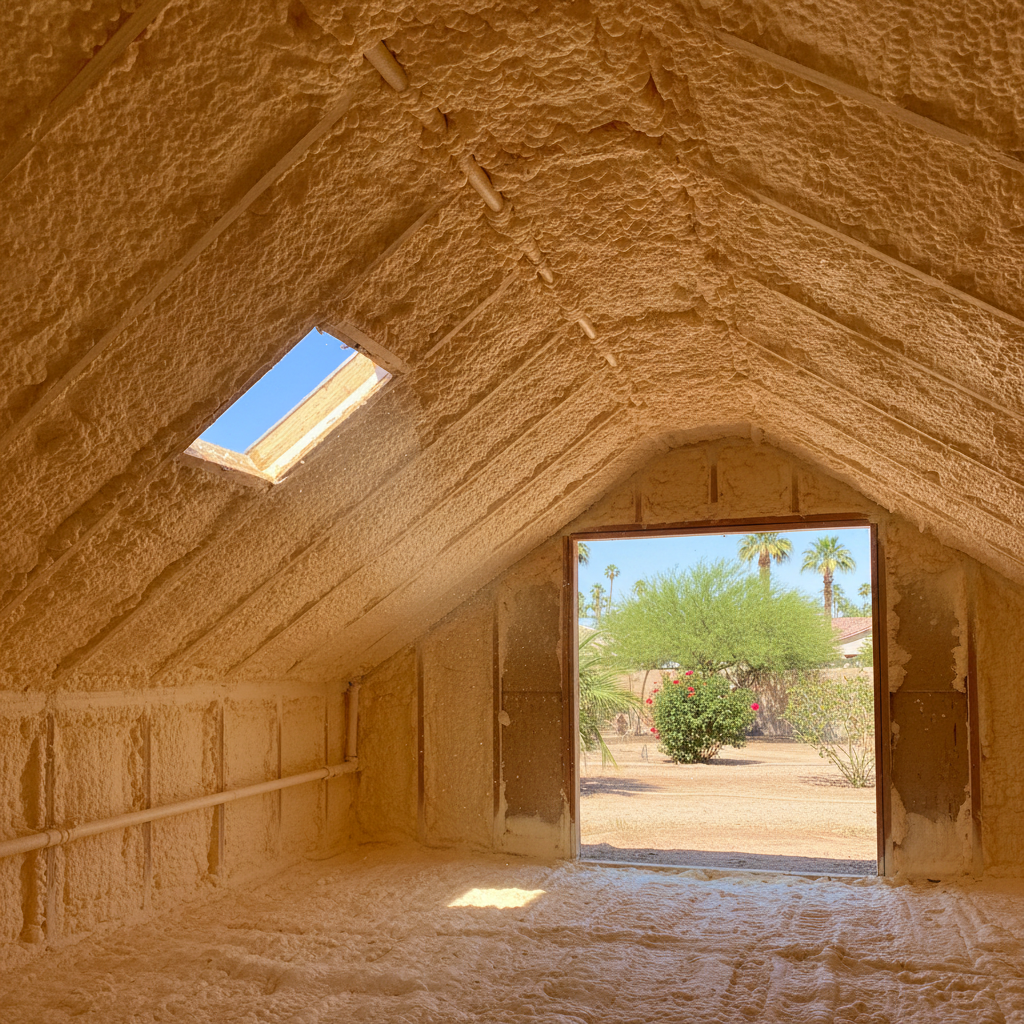
You're thinking about upgrading your home's insulation with closed-cell spray foam. Good call. It's truly one of the best ways to beat our brutal Tempe summers and even those surprisingly chilly winter nights. But here’s the thing: when you schedule that work really matters. It affects not just the installation itself, but also how well the foam performs long-term.
When's the Best Time to Get Spray Foam Installed?
Honestly, there isn't one single 'perfect' day, but some seasons are definitely better than others. Most people only think about insulation when they're already sweating through their shirts in July, or shivering in January. That's totally understandable, but it also means those are our busiest times, so you might end up waiting longer for an appointment.
From a practical standpoint, I always tell folks to aim for the shoulder seasons. Think early spring (March-April) or late fall (October-November). Why those times?
- Milder Temperatures: Spray foam chemicals cure best within a specific temperature range. That goes for both the air around it and the surface we're spraying onto. Extreme heat or cold can mess with the curing process, potentially causing issues like delamination (where it doesn't stick right) or uneven expansion. Sure, we can work in hotter or colder conditions by making specific adjustments, but milder weather usually means a smoother, more predictable application.
- Less Demand: Scheduling during these times often means you can get on our calendar much sooner. You won't be fighting for a spot with everyone else who just got their utility bill and decided they've had enough.
- Comfort for Our Crew: Let's be real, working in an attic when it's 120 degrees outside is incredibly tough on my guys. Milder weather means a safer, more comfortable work environment for them, which, in turn, leads to better focus and a higher quality installation.
Of course, we can—and do—install spray foam year-round. But if you have some flexibility, those shoulder seasons are truly ideal. It gives the foam plenty of time to fully cure and settle before our summer heat puts it to the ultimate test.
How Does Tempe Weather Affect the Job?
Our desert climate isn't just about heat; it's about extremes. Here's what we always keep an eye on:
- Temperature: Like I said, surface and ambient temperatures are super important. If it's too hot, the foam can cure too fast, possibly leading to cracking or poor adhesion. Too cold, and it might not expand correctly or cure completely, leaving you with less effective insulation. We use specialized equipment and techniques to handle this, like pre-heating or cooling surfaces, but it's always a factor we consider.
- Humidity: While it's not as big a deal for closed-cell foam as it is for open-cell, very high humidity can sometimes affect the curing process. Luckily, Tempe isn't exactly known for high humidity most of the year, is it?
- Wind: This one's a biggie, especially if we're working on an exterior wall or a vented attic. Strong winds can carry overspray to places we don't want it. We take precautions, like setting up barriers, but sometimes, if the wind is really whipping through a neighborhood like Papago, we might need to adjust our schedule for safety and quality control.
When you call Spray Foam Pros of Tempe, we'll talk through all these factors with you. We won't just show up; we'll assess your specific situation and make sure the conditions are just right for a top-notch job.
Protecting Your Spray Foam Investment Year-Round
Once that closed-cell spray foam is in, it's pretty much "set it and forget it." That's one of its biggest advantages, actually. Unlike some other insulation types, it won't settle, sag, or lose its R-value over time. It forms an airtight seal that's incredibly durable. Still, there are a few things to keep in mind:
- Avoid Physical Damage: This might sound obvious, but if you're ever doing work in your attic or crawl space, be careful around the foam. Don't scrape it, cut it, or drill into it unless you absolutely have to. If you do accidentally damage a small section, it's usually an easy fix for us to come patch it up.
- Keep it Clean (if exposed): In most cases, your spray foam won't be exposed to the elements. But if it is—say, in a garage or shed—a quick wipe down if it gets dusty is totally fine. It won't affect its performance one bit.
- Pest Control: Spray foam itself isn't a food source for pests, and its density makes it a tough barrier. However, if you have ongoing pest issues, you really should address them. Rodents can chew through almost anything if they're determined enough, and while it's rare, it's best to keep them out of your insulated spaces entirely. A good pest control plan is always a smart move in Arizona.
- Don't Paint It (Unless Necessary): Closed-cell spray foam typically doesn't need to be painted. If you do decide to paint it for aesthetic reasons, make sure you use a compatible paint that won't degrade the foam or trap moisture. Most of the time, it's best left as is.
The beauty of closed-cell spray foam is its longevity and how little maintenance it needs. You're investing in a solution that will keep your home more comfortable and energy-efficient for decades. Just make sure it's installed correctly, and it'll take care of you.