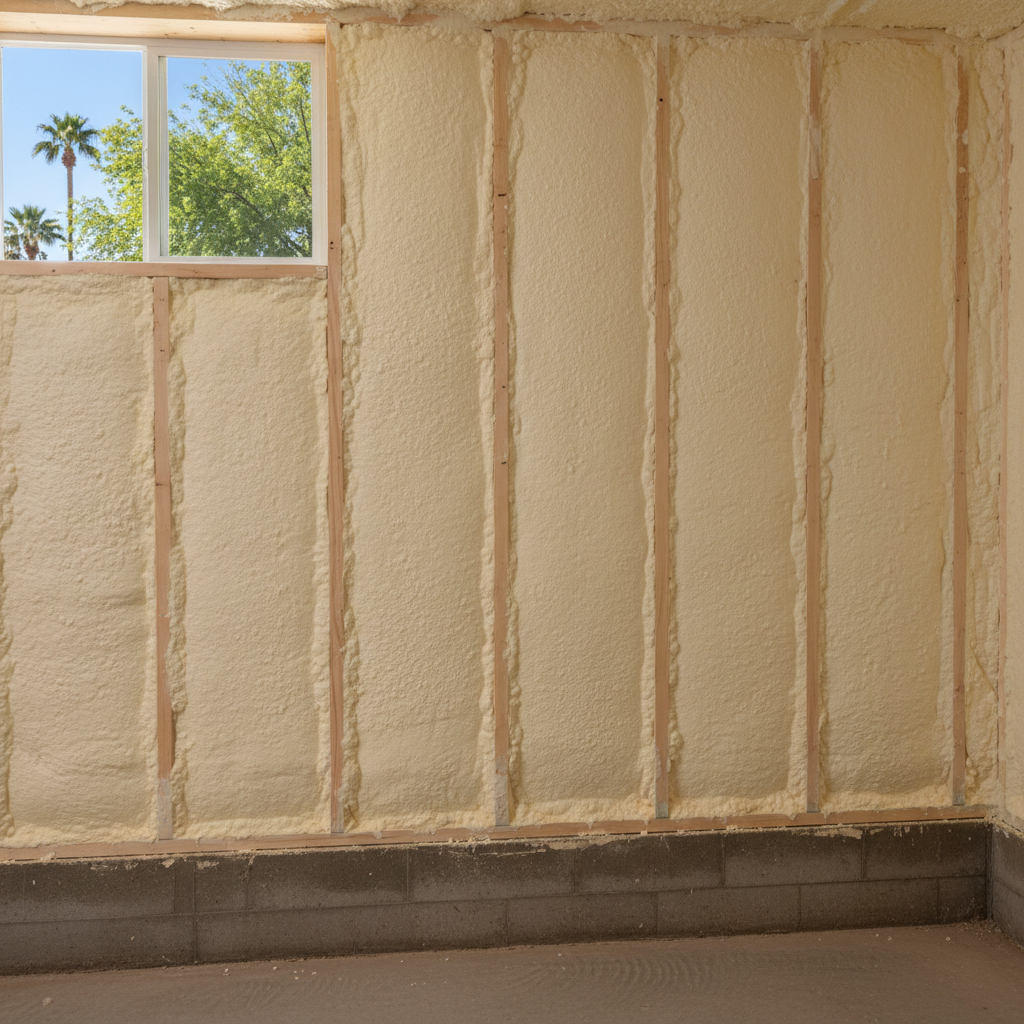
Alright, let's talk basements. Not every home in Tempe has one, that's for sure. But if you're lucky enough to have one, you know it can be a real game-changer for extra space, storage, or even a cool retreat from our brutal summers. The thing is, a lot of folks don't think about insulating their basement walls or rim joists the same way they do their attic or exterior walls. But you should. It's a big deal for comfort and your energy bills. I get a lot of questions about this, so I figured I'd lay out the straight answers to the most common ones I hear.
Do I really need to insulate my basement walls in Tempe? It's underground, so isn't it already cool?
That's a common thought, and it makes sense on the surface. Yes, the earth acts as a pretty good insulator, keeping the ground temperature relatively stable compared to the air above it. That's why basements often feel cooler in summer and warmer in winter than the rest of the house. But 'relatively stable' isn't 'perfectly insulated.' The ground temperature in Tempe, even a few feet down, can still fluctuate. And here's the kicker: uninsulated concrete walls are still a major pathway for heat transfer. In summer, that means heat from the ground eventually seeps in, making your AC work harder. In winter, any heat you're generating inside will escape into the colder ground. Plus, you've got the rim joist area – that's where your foundation meets your first floor framing – which is often completely exposed to outside air and a huge source of air leaks and heat loss or gain. So, yeah, you absolutely need to insulate those basement walls and rim joists if you want a comfortable, energy-efficient space.
What's the best type of insulation for basement walls?
When it comes to basements, you've got a few options, but some are definitely better than others, especially here in a hot, dry climate like Tempe. For basement walls, I almost always recommend closed-cell spray foam or rigid foam board. Here's why:
- Closed-cell spray foam: This is my go-to for a lot of reasons. It creates an air seal, which is critical. Concrete is porous, and spray foam adheres directly to it, blocking air and moisture movement. It's got a high R-value per inch, so you get excellent insulation in a thinner layer. It also adds structural rigidity, and it's resistant to mold and mildew, which is a huge plus in any basement environment, even if we don't have a lot of humidity issues here.
- Rigid foam board (like XPS or polyiso): This is another solid choice. It's easy to install, offers good R-value, and doesn't absorb water. You'll need to seal the seams with tape and use caulk around the edges to get a good air seal, and it usually needs a thermal barrier like drywall over it for fire safety.
I generally steer clear of fiberglass batts directly against concrete in basements. Fiberglass can absorb moisture, and if it gets damp, it loses its insulating value and can lead to mold growth. Even with a vapor barrier, it's just not as robust for this application.
How do I deal with moisture in my Tempe basement before insulating?
This is probably the most important step before you even think about insulation. You absolutely have to address any existing moisture problems first. Insulating over a wet wall is just asking for trouble – mold, mildew, rot in any wood framing, and your insulation won't work right. Even though Tempe is dry, we still get monsoon rains, and if your grading isn't right, water can pool against your foundation. Here's what I tell folks to check:
- Exterior drainage: Make sure your gutters are clean and downspouts extend at least 6 feet away from the foundation. The ground around your house should slope away from the foundation, not towards it.
- Cracks in foundation: Inspect your concrete walls for any cracks. Small ones might be fine, but larger ones need to be sealed.
- Sump pump: If you have one, make sure it's working correctly.
- Interior dampness: Look for any signs of water stains, efflorescence (white powdery residue on concrete), or a musty smell.
If you have active leaks or significant dampness, you need to fix that problem at its source, whether it's exterior grading, foundation repair, or an interior drainage system, before any insulation goes in. Don't skip this step – it's crucial.
What's a rim joist, and why is it so important to insulate it?
The rim joist is that band of wood framing that sits on top of your foundation wall, supporting the ends of your floor joists and the exterior walls of your house. It's basically the perimeter of your floor system right where it meets the foundation. This area is a massive source of air leakage and heat transfer because it's often poorly sealed and uninsulated. Think about it: it's a direct connection between your conditioned living space and the outside air. In Tempe, that means hot, dusty air can easily infiltrate in summer, and any cooler air you're paying to condition can escape. Insulating and air sealing the rim joist area is one of the most cost-effective ways to improve your home's energy efficiency and comfort. Spray foam is fantastic for this because it seals all those little gaps and cracks while providing excellent insulation.
Will insulating my basement help with pest control?
It can definitely help, indirectly. Pests like scorpions, spiders, and rodents are always looking for easy ways into your home, especially when it gets super hot outside, which is, you know, most of the year here in Tempe. Cracks in your foundation, unsealed rim joists, and gaps around pipes are all inviting entry points. When we apply spray foam, especially in the rim joist area and along the top of the foundation walls, we're not just insulating; we're also creating a continuous air barrier. This barrier seals up many of those small holes and crevices that pests use to get inside. It's not a complete pest control solution on its own, but it certainly makes your home less accessible and less attractive to critters looking for a cool, dark place to hang out.
Can I insulate my basement myself, or should I hire a professional?
Look, I'm a contractor, so you might think I'm biased, but I'll give it to you straight. Some insulation projects are DIY-friendly, but basement insulation, especially with spray foam, is usually best left to pros like us at Spray Foam Pros of Tempe. Here's why:
- Spray foam equipment: It's specialized, expensive, and requires training to use correctly. Getting the mix wrong means poor performance or even dangerous off-gassing.
- Safety: Applying spray foam requires proper PPE, including respirators, because of the chemicals involved.
- Air sealing: Achieving a truly effective air seal, especially around complex areas like rim joists, pipes, and electrical, takes experience. A lot of the benefit of basement insulation comes from stopping air leaks, not just adding R-value.
- Moisture management: As I said, this is critical. A professional will know how to identify and address potential moisture issues before insulating.
- Building codes: There are specific codes for basement insulation, including thermal barriers over foam insulation, that you need to follow.
If you're doing rigid foam board and are meticulous about sealing every seam and gap, you might tackle that yourself. But for spray foam, or if you're unsure about any part of the process, hiring a professional ensures the job is done right, safely, and effectively, giving you the energy savings and comfort you're looking for.
How much R-value do I need for my Tempe basement?
That's a good question, and the answer can vary a bit depending on whether you're finishing the basement or just insulating the foundation walls. Generally, for below-grade walls in our climate zone (which is Zone 2 for Tempe, according to the IECC), the recommendation is typically R-10 continuous insulation on the interior or exterior, or R-13 cavity insulation. However, I usually recommend going a bit higher if your budget allows, especially if you plan to finish the basement and use it as living space. For spray foam, an R-value of R-15 to R-20 is a good target for basement walls. This usually means about 2.5 to 3 inches of closed-cell spray foam. It gives you a good buffer against temperature swings and helps keep that space comfortable and efficient year-round. Remember, a higher R-value means better resistance to heat flow, which translates to more comfort and lower energy bills in the long run.
Will insulating my basement make my home more comfortable overall?
Absolutely. It's not just about the basement itself. When your basement is properly insulated and air-sealed, it becomes a more stable environment. This has a ripple effect on the rest of your house. Your HVAC system won't have to work as hard to maintain a consistent temperature upstairs because there's less heat transfer happening through the foundation. You'll notice fewer drafts, especially on the first floor, and the floors might even feel warmer in winter. It reduces the load on your air conditioner in our intense summers, which can lead to significant savings on your utility bills. Plus, a well-insulated basement means a quieter home, as the insulation helps dampen outside noises. It's a smart investment that pays off in comfort and savings for years to come.
```