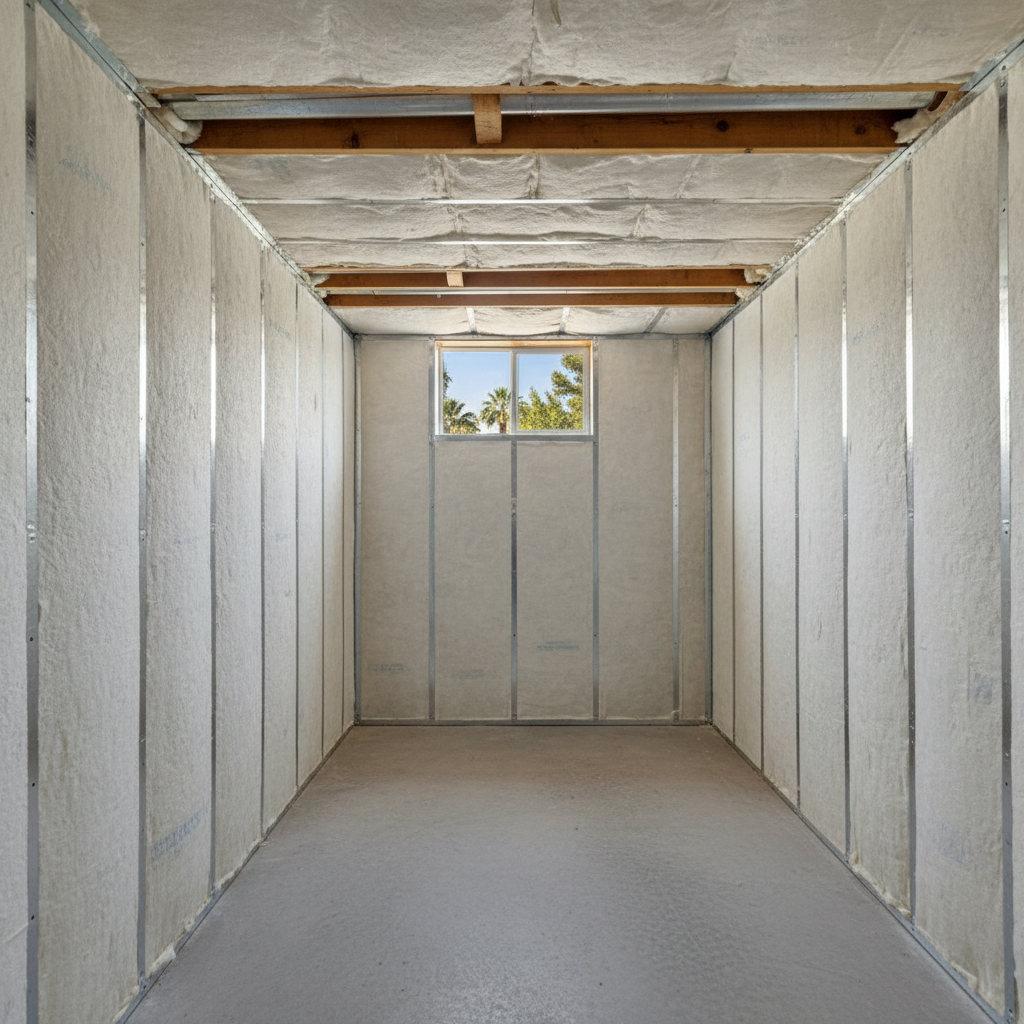
Basement and sub-grade insulation in Tempe, AZ homes often seems straightforward until problems occur. Working on spaces built into the earth around our local desert caliche soil presents unique challenges that standard cookie-cutter contracting guides do not cover. Spray Foam Pros of Tempe receives calls all the time from property owners trying to fix expensive rookie errors after a remodel.
Skipping the Moisture Assessment First
The biggest mistake you can make is applying material against concrete walls without checking for hidden dampness. Even though the Tempe, AZ climate is dry most of the year, sub-grade walls deal with hydrostatic pressure and vapor drive during summer monsoon downpours. If you trap moisture behind a new layer of Insulation without a proper vapor retarder or closed-cell application, mold colonies will grow very quickly behind the walls.
Choosing the Wrong Material for Sub-Grade Realities
Not all Insulation behaves nicely against cool concrete foundations. Using standard fiberglass batts down low is a recipe for sagging, rotting, and ruined walls because it absorbs humidity like a sponge. You need materials that bond directly or resist moisture intrusion completely. Spray Foam Pros of Tempe always tells property owners to look closely at what their contractor proposes—if they are not recommending closed-cell polyurethane foam or specially rated rigid boards for sub-grade spaces, you should look for another contractor.
Ignoring Local Code and Thermal Bridging
People often rush through the planning phase and forget about building codes or thermal bridging through framing studs. Saving money upfront by hiring the cheapest bidder usually means dealing with uneven R-values, condensation drips, and failed inspections down the road. For homes in Tempe, Spray Foam Pros of Tempe provides Insulation services that meet all local standards and building codes.