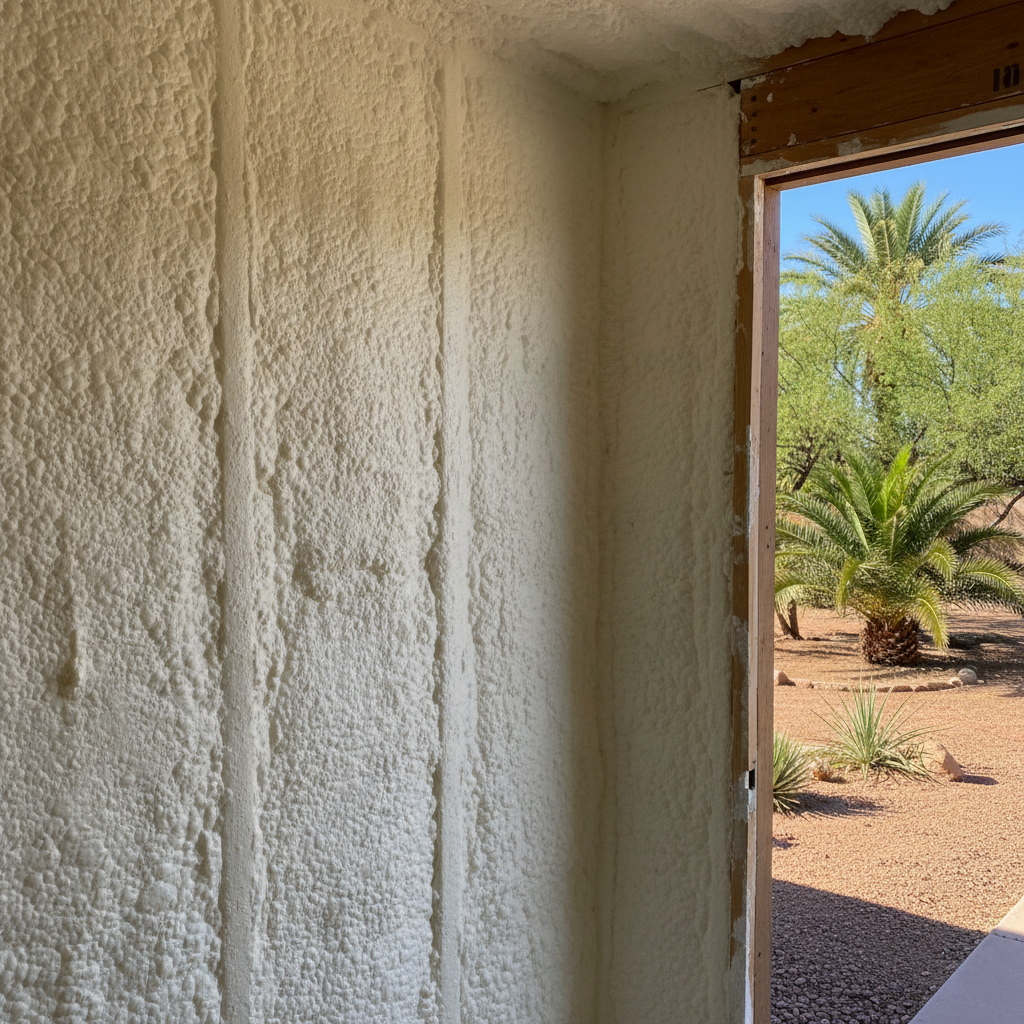
Do I really need to insulate my shed in Tempe? It's just a shed.
Look, I get it. A shed isn't your main house. But here in Tempe, with our summers hitting 115 degrees and even our winters getting surprisingly chilly at night, that shed can turn into an oven or a freezer pretty darn quick. If you're storing anything sensitive — tools, paint, electronics, gardening supplies, or even just want a comfortable spot for a hobby — then yeah, you absolutely need insulation. Uninsulated, those temperatures inside can swing wildly, damaging your stuff and making the space unusable for half the year. Think about it: that expensive power tool sitting in 130-degree heat isn't going to last as long, is it?
What's the best type of insulation for a shed in our Arizona heat?
For sheds, especially here in Tempe, you want something that handles extreme temperatures and resists moisture. That's why I almost always recommend spray foam insulation. It's not just about the R-value, though spray foam has a great one; it's really about how it seals. Spray foam expands to fill every little crack and crevice, creating an airtight barrier. This is huge for keeping the heat out in summer and the cool air in if you're running a small AC unit. It also helps with pests, which is a nice bonus. Fiberglass batts can work, but they don't seal nearly as well, and if they get damp, their performance drops significantly. Rigid foam boards are another option, but you'll still have seams that aren't perfectly sealed.
What about moisture and pests in an insulated shed?
This is where good insulation really shines. Our monsoon season, while short, can bring some serious humidity. And pests? They just love dark, quiet, unsealed spaces. Spray foam insulation acts as a fantastic vapor barrier, which is critical for preventing condensation and mold growth inside your shed. Because it seals so tightly, it also makes it much harder for scorpions, spiders, and rodents to find their way in. They can't chew through it easily like they might with fiberglass. It's a double win: better temperature control and a more secure, drier environment for your belongings.
Can I insulate my shed floor and roof too, or just the walls?
You absolutely should insulate the floor and roof, especially here in Tempe. Heat rises, sure, but it also radiates down from a scorching hot roof. And the ground can get pretty warm, or cold, depending on the season. If you only do the walls, you're leaving big thermal holes. For the floor, insulating underneath can prevent moisture from wicking up and keep the ground temperature from impacting the shed's interior. For the roof, it's critical. A metal or shingled roof baking in the Arizona sun will transfer a massive amount of heat into your shed if it's not properly insulated. We often see folks in older neighborhoods like Papago with sheds that are basically ovens because they only insulated the walls.
Is insulating my shed a DIY project, or should I call a pro?
It really depends on the type of insulation and your comfort level. If you're just tacking up some rigid foam boards and taping the seams, that's probably something you can tackle yourself. But if you're looking at spray foam, that's a whole different ballgame, believe me. Spray foam requires specialized equipment, proper safety gear, and a good understanding of how it cures and expands. If it's not applied correctly, you can end up with voids, uneven coverage, or even issues with off-gassing if the chemicals don't mix right. For a job that's going to last and perform optimally, especially with spray foam, I'd always recommend bringing in a professional like us at Spray Foam Pros of Tempe. We've got the tools and the experience to get it done right the first time.
How much does it typically cost to insulate a shed?
That's a tough one to give a flat number for because sheds vary so much in size and construction. A small 8x10 shed is going to cost a lot less than a 12x24 workshop. The type of insulation also plays a huge role. Spray foam is generally more expensive upfront than fiberglass batts, but its long-term benefits in terms of energy efficiency and durability often make it a better value, especially if you're planning to cool the shed. The best way to get an accurate cost is to have us come out and take a look. We can give you a clear, no-obligation quote based on your specific shed and what you're trying to achieve with it.
Will insulating my shed really make it cooler in the summer?
Absolutely. It's not magic, but it's pretty close. Think of insulation as a thermal barrier. In the summer, it slows down the transfer of heat from the scorching outside into your shed. If you combine good insulation with a small window AC unit or even just a good fan, you'll be amazed at the difference. Without insulation, any cool air you try to pump in will just escape immediately, and the heat will pour in. With it, you create a much more stable environment. It's the difference between trying to cool a sieve and trying to cool a sealed box. You'll definitely notice it when you step inside on a 110-degree day.