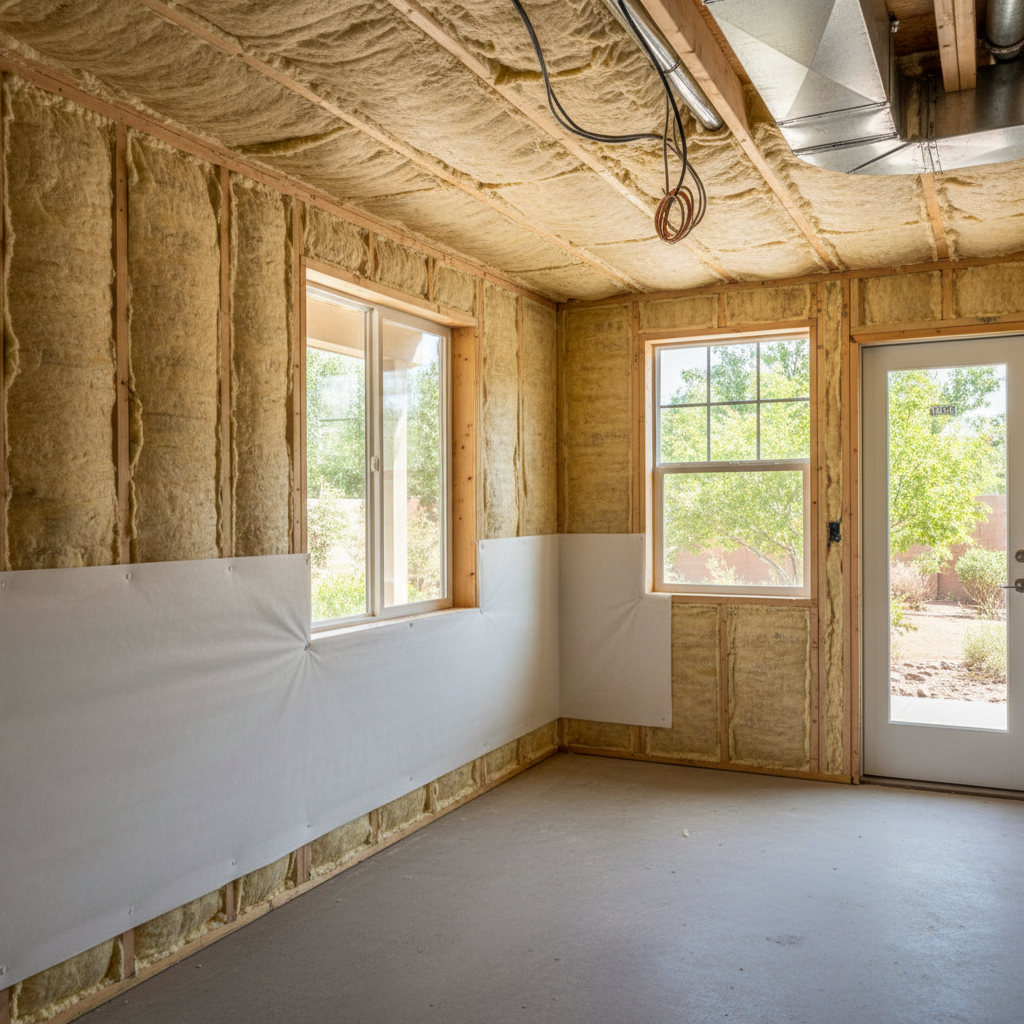
Sub-grade spaces in Tempe, AZ are pretty unique. While most houses across the Valley skip them due to our hard caliche soil, older pockets of town and custom builds do feature them. If you are working on a below-grade space here, you are dealing with a totally different thermal dynamic than someone up in Flagstaff or back East. Too many homeowners treat these walls like regular above-ground framing, and that shortcut usually backfires.
Here is what Spray Foam Pros of Tempe has seen go sideways on these projects more times than we can count, along with some hard-earned advice on how to keep your investment solid.
Ignoring the Moisture Reality
People assume the desert is bone dry, but sub-grade concrete tells a different story. Moisture vapor constantly moves through below-grade walls through capillary action. If you slap standard fiberglass batts right against that concrete without a proper vapor retarder or air barrier, you are building a sponge. Trapped humidity turns into mold behind your walls real quick. At Spray Foam Pros of Tempe, we always look at the moisture profile first before recommending any insulation materials.
Choosing the Wrong Material for the Climate
Using organic or permeable insulation in a sub-grade application is a recipe for regret. Standard cellulose or paper-faced batts degrade when they encounter concrete humidity. You need something that resists moisture absorption and stops air movement dead in its tracks. Closed-cell foam or rigid foam boards handle these environments much better because they form a monolithic moisture and thermal barrier simultaneously.
Skipping the Thermal Bridging Fix
A lot of DIYers and cheap contractors frame wood stud walls directly against the concrete foundation without insulating behind or between the framing properly. That creates massive thermal bridges where heat conducts right through. If you do not isolate the framing from the cold mass of the concrete wall, you will get condensation forming on your studs during temperature swings.
Failing to Seal the Rim Joists
You can insulate every square inch of your concrete walls, but if you leave the rim joists wide open at the top, your project won't perform. That area where the foundation meets the wood framing is notorious for air leakage. Sealing up those gaps is mandatory if you want any real control over your utility bills or indoor draftiness.
Getting this work done right means respecting how local soil, concrete, and heat interact. Take your time, check your contractor's background on sub-grade jobs specifically, and do not fall for shortcuts that ignore moisture control. Spray Foam Pros of Tempe provides Insulation Contractor services for homes in Tempe, AZ.